The ÐЯЭΛԁᵽāɪɪ Interview: Inside the Emotional Architecture of a Dark Electronic Universe
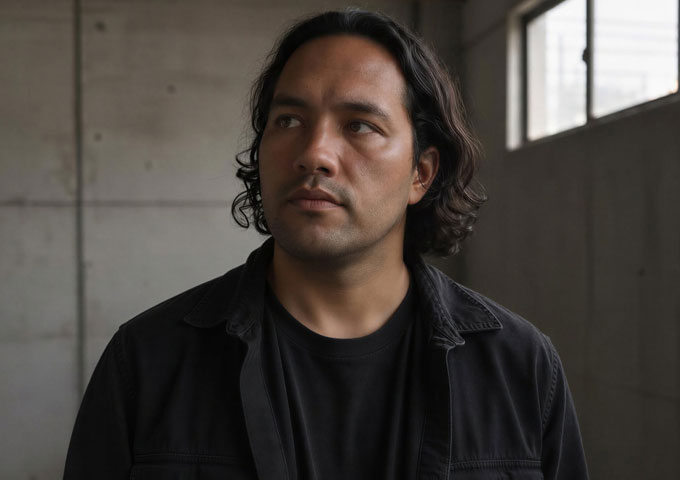
For ÐЯЭΛԁᵽāɪɪ, known in plain text as DREADPAII and pronounced Dread-Pah-Two, music began again with a need to give difficult emotions somewhere to exist. After stepping away from production for approximately 17 years, Ashley Rawiri returned to music carrying confusion, anger, sadness, alienation and feelings that ordinary language could not adequately contain. What began as an intensely personal act of emotional release gradually developed into something far more expansive: a dark electronic universe populated by complex characters, interconnected narratives and carefully constructed psychological environments. Drawing on an earlier foundation in hip-hop, R&B, reggaeton and dancehall, DREADPAII now moves through witch house, industrial darkwave and atmospheric alternative electronics, creating music in which vulnerability and brutality can occupy the same space without requiring either to reach a convenient resolution.
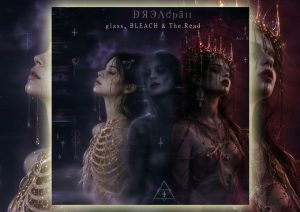
At the heart of this distinctive creative process is an extraordinary relationship between sound and visual perception. Through synaesthesia, music becomes something experienced in colours, shapes, textures, landscapes and physical spaces, influencing everything from vocal placement and bass frequencies to distortion, silence and the emotional distance between characters. Yet DREADPAII’s artistic vision extends well beyond production. Filmmaking, poetry, prose, visual art and fashion all contribute to an elaborate storytelling system in which characters are developed through production bibles, visual identities and evolving psychological states. This approach comes into particularly sharp focus across glass, BLEACH & The.REad, EY.ORN, RusT & Why_ERRR!!!! and After//Heaven, where recurring motifs and shifting perspectives connect individual albums into a much larger emotional narrative. Amelia’s transformation from heartbreak and vulnerability into the formidable yet deeply complicated Sovereign demonstrates an unwillingness to offer predictable resolutions or confuse personal power with healing.
In this in-depth conversation, DREADPAII opens up about the emotional circumstances behind returning to music, the Māori whakapapa connecting the artist to Ngāti Tūwharetoa and Ngāti Maniapoto, and the musical legacy extending through family history, including a grandfather’s involvement with the Māori Volcanic Show Band. The discussion also explores the psychology of repetition, the relationship between private experience and fictional storytelling, the challenges of preserving emotional honesty without exposing other people’s identities, and the transition from an intimate studio practice into an ambitious live electronic performance. With the forthcoming fourth album SHA.DOW POE.IT.RY, scheduled for July 9, 2027, promising an even harsher and more psychologically confronting chapter in Amelia’s story, this is a revealing look at an artist whose work is as much about constructing entire worlds as it is about making music. Ultimately, DREADPAII’s invitation is not simply to listen, but to enter those worlds and discover what they bring into focus within ourselves.
- After roughly 17 years away from producing, what was happening emotionally that brought you back to music? Was there a particular moment, experience or accumulation of feelings that made returning to the creative process feel necessary?
ÐЯЭΛԁᵽāɪɪ: I was dealing with a lot of different emotions at once: confusion, anger, sadness, concern, neglect and alienation. Some of that confusion was connected to feelings I had for someone, which I was trying to understand alongside everything else I was carrying. It was only one part of a much wider emotional situation, but it wouldn’t be honest to leave it out completely.
I did not fully understand everything I was feeling, and I did not have anywhere adequate to put it. That accumulation became the unusual trigger that brought me back to producing after roughly 17 years away.
I was already expressing myself through filmmaking, prose, poetry and creative writing, so music became an extension of those forms. It gave me a container that could hold several emotions at once, including feelings that contradicted each other or did not have a clean explanation.
The first song was Glass on My Chest. On the surface it is a hook-driven, hyperpop-influenced dance track, but underneath that energy there is a lot of fragility. At that point I had no idea I was starting DREADPAII. I was simply trying to contain what I was experiencing. Eventually, that container came loose and became much bigger than I expected.
I am more aware of the process now, but I do not want that awareness to block the feeling itself. I understand the craft better, but I never want the craft to sterilise the experience that makes the music necessary.
- You’ve said that music gave difficult emotions somewhere else to exist. What does that mean to you personally, and what could music hold or communicate that ordinary language couldn’t? Has the act of creating changed your relationship with those emotions over time?
ÐЯЭΛԁᵽāɪɪ: Music lets me express things in a more emotive, honest and sometimes brutal way than my other creative forms. Filmmaking gives me image, movement and atmosphere. Prose and poetry give me language and observation. Music brings those together with rhythm, texture, physical impact and the human voice.
Making music did not suddenly make everything bearable. It did not fix the emotions or remove their source. What it gave me was release and containment. Music allowed contradictory feelings to coexist without forcing them toward a clean conclusion.
Once those emotions had shape, movement and sound, they could exist somewhere beyond my immediate internal experience. People do not need my exact circumstances to enter these worlds. I may have built the room from my emotional material, but listeners bring their own lives into it.
- Your work begins with private emotional material but develops into characters, narratives and complete sonic worlds. How does that transformation happen without requiring every private detail to become public? Where do you draw the boundary between emotional honesty and creative privacy?
ÐЯЭΛԁᵽāɪɪ: Everything begins with emotion, but I do not leave it in its original form. I break it down through word roots, morphology, association, images and sound. A word might produce a texture, phrase, vocal treatment or the first glimpse of a character.
The source is not always solely about me. Sometimes it begins with my response to another person or something I have observed. I stay focused on what I experienced rather than claiming to explain somebody else’s inner life. From there, the material becomes fictionalized and distributed across composite characters.
Amelia is not one real person in disguise. She is built from emotional truth, observation, imagination, conversations, friendships and fictional elements. What remains intact is the emotion. Facts can change, identities can disappear and several experiences can become one character.
That is my boundary. I protect literal circumstances and other people’s identities because the listener does not need them. Emotional honesty does not require factual disclosure.
- When people began listening and connecting with the music, you described their interest as unexpected encouragement rather than the original motivation for creating it. Did knowing that your work was resonating with others change how you viewed DREADPAII or give you a different reason to continue?
ÐЯЭΛԁᵽāɪɪ: I never expected people outside friends, family and work colleagues to hear the music. When I was invited to a radio interview in a Russian-speaking country, it completely threw me. The host translated comments from listeners who described the work as brutally honest, psychologically deep and still approachable. They heard it as something closer to entering a film or book than a collection of tracks.
That showed me people genuinely wanted to enter these stories. Their response encouraged me to continue and made me curious about how far the work could travel, but it did not change why I create. I still produce as emotional expression, containment and release rather than to satisfy an audience.
My responsibility is to preserve the emotional truth without turning the music into evidence against somebody else.
- Before DREADPAII, you spent time producing hip-hop, R&B, reggaeton and dancehall. How did you first get into music, and what did those earlier genres teach you about rhythm, arrangement, production and emotional expression? Are there elements of that musical foundation that still find their way into your darker electronic sound?
ÐЯЭΛԁᵽāɪɪ: I entered music at around 13 after being forcibly removed from Long Bay College and entering an alternative-education program where music production was both a practical skill and a form of expression. I first learned on a battered DJ mixer and an old version of Sony Vegas, and then taught myself through experimentation.
I produced for young singers and aspiring rappers. Hip-hop and R&B shaped how I hear rhythm, vocals, bass and hooks. Reggaeton and dancehall later opened another rhythmic world through Latin dance and production.
When I returned properly, the technology had changed, but more importantly, my reason for producing had changed. DREADPAII began as containment and release. The earlier instincts remain in the 808s, toms, snares, claps, syncopation, vocal placement, hooks and physical movement, but they now serve a darker emotional and narrative purpose.
- Music also appears throughout your whakapapa and wider family history. Your grandfather was an original member of the Māori Volcanic Show Band, while your cousin performs in Australia as the rapper Day1. How have these different musical connections influenced your understanding of your own creative identity, and do you see yourself as continuing any kind of family musical legacy?
ÐЯЭΛԁᵽāɪɪ: I grew up hearing stories from my grandmother and father about my grandfather’s involvement with the Māori Volcanic Show Band and their international touring. I appreciate that history much more now that I am taking my own music seriously.
My cousin Day1 represents another part of that line. I did not pay much attention to his music when he first became successful, and I probably should have been more supportive. I recognize his achievement more now as part of a musical continuity across generations.
Their achievements belong to them, but they changed how I understand our family history. I see my return as something inherited, rediscovered and completely new. I do not need to imitate either pathway. I can add something to the line in a way that reflects the artist I have become.
- As a Māori artist with whakapapa to Ngāti Tūwharetoa and Ngāti Maniapoto, how do your cultural identity, ancestral connections and relationship with Aotearoa inform the way you approach creativity? Do you find that your sense of belonging or cultural perspective influences your work in ways that might not always be immediately visible to listeners?
ÐЯЭΛԁᵽāɪɪ: Being Māori and Indigenous gives me a way of seeing people, place, history, emotion and consequence as interconnected rather than separate. That interconnectedness shapes how I construct music and narrative.
I am a Māori artist because I am Māori. I do not need to force obvious cultural markers into every track or perform an exaggerated version of my identity for branding. Māori concepts and states of being still help me understand characters, relationships and emotional space, even when they are not named in the lyrics.
I think of the sound as a whare: every voice, bass line, silence, phrase and distortion has a relationship with everything around it. I hope listeners feel that underlying interconnectedness, even when it is not immediately visible.
- You experience music through synaesthesia, sensing sound in terms of color, shape, texture, distance and movement. What does that experience actually look or feel like when you’re producing? Can you describe a particular sound or musical moment that you instinctively recognized visually before finding a way to translate it into the production?
ÐЯЭΛԁᵽāɪɪ: My synaesthesia is not limited to color. I can experience shape, texture, movement, distance, landscapes, rooms, imagined touch and even smell. I might sense pine in the air or see paint flaking from a wall.
When I hear a voice, I can picture the character attached to it: hair, makeup, clothing, posture and movement. Those details influence the vocal tone and the sounds around the character. As the character changes, the room can become harsher, more crowded, more distant or less stable.
Sometimes a production decision feels conventionally wrong because it is too abrupt, distorted or uncomfortable, but it is correct within the character’s emotional experience.
Clooosed Offf taken from the second album perfectly encapsulates that sense of withdrawal from the male perspective and the airy atmosphere defines that fogginess.
- Your approach to production seems to treat sound almost like a physical environment. How do decisions involving vocal distance, bass, distortion and silence communicate what a character is experiencing? For example, can changing the perceived size of a sonic space alter how vulnerable, isolated or overwhelming a particular moment feels?
ÐЯЭΛԁᵽāɪɪ: Spatiality and relational proximity are central to my production. Distance can communicate closeness, separation, violence, intimacy, vulnerability or discomfort. A close voice can feel intimate or confrontational. A whisper can command attention rather than imply shyness.
UNREAD is a clear example. The words don’t care are spoken, whispered and screamed. The language stays the same, but the meaning changes from detachment to self-persuasion, pressure, anger or instability.
A heavy 808 can make an emotion physically unavoidable. Distortion can suggest pressure or loss of coherence. Silence can create absence or the sense that something cannot yet be spoken. The character exists in the spatial relationships between sounds, not only in the lyrics.
- Repetition appears throughout your music, but it can serve a much deeper purpose than simply creating a memorable hook. How do you use repetition as a psychological or narrative device? Can repeating a particular sound, phrase or musical passage gradually change its emotional meaning as a character’s circumstances evolve?
ÐЯЭΛԁᵽāɪɪ: I use repetition to represent emotional paralysis, memory, fixation and rumination. A character may repeat something to remember why they are acting a certain way or to convince themselves it is true. Repetition can drive them, but it can also expose what they are avoiding.
In UNREAD, don’t care changes each time it is delivered. It can sound dismissive, wounded, unstable or desperate. Across projects, sounds and motifs also return in new contexts, allowing Amelia and the listener to recollect earlier states without simple nostalgia.
I balance predictability with disruption through counter-cadences, unexpected runs, rhyme changes and shifts in texture. In DREADPAII, a phrase usually repeats because the character has not finished with it.
- You seem naturally drawn to building complete albums and interconnected character worlds rather than releasing disconnected collections of singles. What is it about the album format that allows you to express something you couldn’t achieve through individual tracks? Do you generally discover the story through the music, or does the wider narrative determine how the music needs to develop?
ÐЯЭΛԁᵽāɪɪ: I approach music from a filmmaking perspective. I am building a world, and one song is rarely enough. I need characters, scenes and chapters. An album gives an emotional state enough time to become character transformation.
Albums allow brutality and vulnerability to coexist because people are contradictory. Production bibles help me track characters, emotional states, visual rules and narrative developments. Colors and palettes can guide texture, weight and spatial arrangement.
A single can invite somebody through the door, but an album reveals the architecture of the house. Sometimes building the production bible, the story is determined by the production and other times, the narrative. It moves either way depending on what is more focusable.
- Your creative process extends beyond music into poetry, prose, visual art and fashion. How do these different disciplines contribute to the development of a character? Do you sometimes begin by imagining how a character looks, dresses or moves before deciding how that character should sound?
ÐЯЭΛԁᵽāɪɪ: Everything begins with emotion, but I do not leave it in its original form. I break it down through word roots, morphology, association, images and sound. A word might produce an image, a texture, a phrase, a vocal treatment or the first glimpse of a character.
When I hear a voice, I can begin to picture the character attached to it. I might see their hair, makeup, clothing, posture or how they move through a room. Those details may never be explained to the listener, but they influence the vocal tone and the sounds surrounding that person.
Filmmaking and creative writing help me organize these projects. I create production bibles and track characters, emotional states, narrative developments and the visual rules of each world. Colors and palettes can help determine what a track should sound like. The visual material guides the texture, weight and spatial arrangement of the music. Being a avid fashion lover and designer, in my view, I try to encapsulate the grittiness of the aesthetic of the character to help develop their sound. Amelia, my pride and joy of character development in her queen form is wearing thick blood red lipstick, alongside her other choice of aesthetics, which helps to stimulate what her sound is like: visceral, gory and unweighted. Her naive self on the other hand in the first album, light peach blush, shimmering lip-gloss represent her innocent phase and so I try to replicate that in the sound.
- In glass, BLEACH & The.REad, Amelia’s story begins with heartbreak and vulnerability but gradually becomes considerably more complicated. Why was it important to allow her to develop beyond the familiar role of someone experiencing heartbreak? What interested you about exploring the ways emotional experiences can change a person’s identity, behavior and perception of themselves?
ÐЯЭΛԁᵽāɪɪ: It is common to portray a heartbroken woman as vulnerable and then move her toward a clean resolution. I was not interested in that. For Amelia, heartbreak is the beginning, not the conclusion.
Her resentment gradually turns inward. She confronts not only what happened to her but what she believes she allowed herself to endure. That moves her through fragility, exposure, self-erasure and attempted sovereignty.
Her reclamation of power is not healthy or morally correct. She constructs protection so extreme that it transforms her. Sovereignty does not automatically mean healing. Amelia becomes sovereign over her own ruin.
The decisive point is UNREAD. The repeated don’t care marks her movement toward the Sovereign. She begins taking responsibility for what she is becoming, even though what she becomes is monstrous.
- The narrative continues through EY.ORN, RusT & Why_ERRR!!!! and After//Heaven, extending the original album’s world through different perspectives. How do you maintain a sense of continuity between these projects while allowing each album to establish its own emotional identity? Do you approach the connected albums as chapters of one larger story, or does each project reveal something that changes your understanding of the others?
ÐЯЭΛԁᵽāɪɪ: glass, BLEACH & The.REad follows Amelia as vulnerability and resentment turn inward, then become self-erasure and external transformation. EY.ORN, RusT & Why_ERRR!!!! moves into a male perspective built around internal collapse and the pressure to appear strong while deteriorating within.
Rust represents apparent steel wearing away from inside. Why_ERRR!!!! plays on wire: something that connects, binds, supports and constrains. After//Heaven then explores relief, fantasy, escape, idealism and utopia through sonic distance and the void between present reality and an imagined perfect state.
The projects are chapters in a larger emotional universe, but each has its own sonic identity. Recurring motifs maintain continuity while different viewpoints change what the listener thinks they understand about the others. The fixed story provides structure, while unresolved elements let listeners participate in meaning.
- When developing a character across an entire album, how much of their personality and psychological journey do you establish before entering the studio? Do you ever find that the production itself reveals unexpected aspects of a character, taking the narrative somewhere you hadn’t originally intended?
ÐЯЭΛԁᵽāɪɪ: I create production bibles and track characters, emotional states, narrative developments and the visual rules of each world. I spent close to a year studying psychology because I wanted to understand Amelia more deeply and portray her with consistency and emotional credibility.
At the same time, I do not want awareness or planning to become so controlling that it blocks the emotional input. I still need the process to be instinctive, exposed and honest.
During production, Amarin or the male figure from the second and third album changed phases of him approaching the required level of humanity as the male psyche alongside the traditional male view of manhood required a more phased approach to shedding the layers and armor of him.
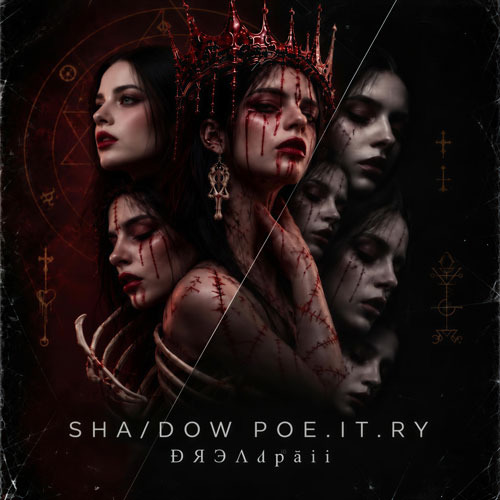
- Your forthcoming fourth album, SHA.DOW POE.IT.RY, is planned for July 9, 2027. The title alone suggests an interesting relationship between darkness, language and artistic expression. What does this project represent at this particular stage of your development, and how does it revisit the established DREADPAII universe without simply repeating what came before?
ÐЯЭΛԁᵽāɪɪ: SHA.DOW POE.IT.RY is partly a wordplay on Edgar Allan Poe and reflects my tendency to break words apart so they carry several meanings. Amelia has already become the Sovereign and is trapped in a house between seven and seven. I leave open whether that house is physical, spiritual, psychological or all three.
Six entities appear as versions or functions of Amelia: the Judge, Juror, Accuser, Watcher, Young Amelia and Naïve Amelia. They become metaphysical beings she can see and confront. The album asks what happens when power does not erase everything a person once was.
Sounds and motifs from the first album return as recollection and distorted recognition rather than nostalgia. Production-wise, the album is harsher, more brutal and more physically forceful, with a stronger guitar presence and different historical and contemporary 808 treatments.
It is psychologically and spiritually dense, lyrically heavy and emotionally forceful. It traps the Sovereign in a house with everything she thought she had left behind.
- Across these interconnected projects, your music moves between witch house, industrial darkwave, atmospheric electronic music and more melodic alternative-electronic territory. How important is it for you to remain stylistically unrestricted? Do you choose a particular sound because it suits the emotional needs of a character, even if that means moving away from the genre or production approach listeners might expect from DREADPAII?
ÐЯЭΛԁᵽāɪɪ: Many tracks are melodic or relatively easy to enter, but I do not force every piece to sound comfortable. Some projects require abrasive textures, heavy sub-bass, hard kicks or disorienting arrangements. The difficulty is not arbitrary. The sound has to represent what the work is exploring.
The first album moved openly through a wider range of genres, while SHA.DOW POE.IT.RY combines two or three styles more densely and aggressively within individual compositions.
There are times in the studio I might be half way and think “hmm how will the audience take it” I try to provide listenability alongside narrative driven story immersion, with some songs reaching more the listenability whilst deceptively covering their raw beauty.
- Much of DREADPAII has developed through an intensely personal studio process, where you control the production and construct the sonic environments yourself. You’re now developing the project into a live electronic performance using your own music, performance stems, live processing and visual collaboration rather than a conventional DJ set. What do you want audiences to experience in that setting, and what aspects of the music become possible when the work moves from the private studio into a shared physical space?
ÐЯЭΛԁᵽāɪɪ: I want audiences to experience DREADPAII moving from a controlled studio environment into something physical, shared and in full motion. It won’t be a conventional DJ set. I plan to use performance stems, live vocals, processing, new transitions and original visual material to open the songs up beyond their recorded versions.
Some sections may be isolated, rearranged or extended depending on the space and the energy in the room. I’m also exploring visual and cultural elements that genuinely belong within DREADPAII, including film material and music videos connected to the album narratives.
Moving from studio production into live performance is a significant change for me, and mentors have strongly encouraged that development. It will require rehearsal and experimentation, but I’m interested in discovering what these private sonic worlds can become when they are experienced collectively in a physical space.
- Having returned to music after such a long absence, you now have an established creative identity, multiple interconnected albums and an increasingly ambitious artistic world. Has the person making the music changed as much as the music itself? Looking back at the emotional circumstances that initially brought you back to producing, what would you say you understand about your creative journey now that you couldn’t have recognised at the beginning?
ÐЯЭΛԁᵽāɪɪ: When I returned properly, nothing felt familiar. The technology had changed, but more importantly, my reason for producing had changed. I was not returning to resume an old career. I returned because I needed the form itself.
The difference now is that I am more aware of the process. I understand what I am doing when I turn an emotional state into music, but I do not want that awareness to become so controlling that it blocks the feeling itself.
In honesty, I have not changed as I think change is part of life but adapted to the new reality that emotions, states of being and what I am feeling deep down is the harsh reality. A man trying to be hoenst about what affects him is rare and is often misunderstood these days. That’s the scary reality: I came back because of these feelings, emotions and the states I was transitioning through myself.
- Finally, DREADPAII brings together music, storytelling, visual imagination, cultural identity and deeply personal emotional expression. When someone encounters your work for the first time, what do you hope stays with them after the music ends? Is there something about the world you’re building that you particularly want listeners to understand, or are you equally comfortable with people discovering meanings that you never consciously intended?
ÐЯЭΛԁᵽāɪɪ: People do not need to know my exact circumstances to enter these worlds. They arrive with their own sadness, confusion, anger, longing or isolation. I may have built the room from my emotional material, but listeners bring their own lives into it.
Every listener already arrives with a version of the story living inside them. The fixed storyline gives the world structure, while the unresolved elements allow listeners to participate in making meaning.
I am mindful of two things: I want people to explore the timelines and worlds I create. I want them to resonate the messages or themes inside each track, album etc.
People should be given the space also to apply their own take on what the story means or how it touches them in their own way. The story, narrative and drive is there, the listener is along the journey going through it and they decide how it affects them.
OFFICIAL LINKS:
Bandcamp: https://dreadpaii.bandcamp.com
Spotify: https://open.spotify.com/artist/1pOWv69a9Qlz1GyVnyi4EZ
Facebook: Kesate Iyasu
Instagram: v_i_rari
Media contact: v-i-rari@hotmail.com