
Baad Krio and Amie Kallon Celebrate Sierra Leonean Identity Through the Infectious Afrobeats Energy of “Monjama”
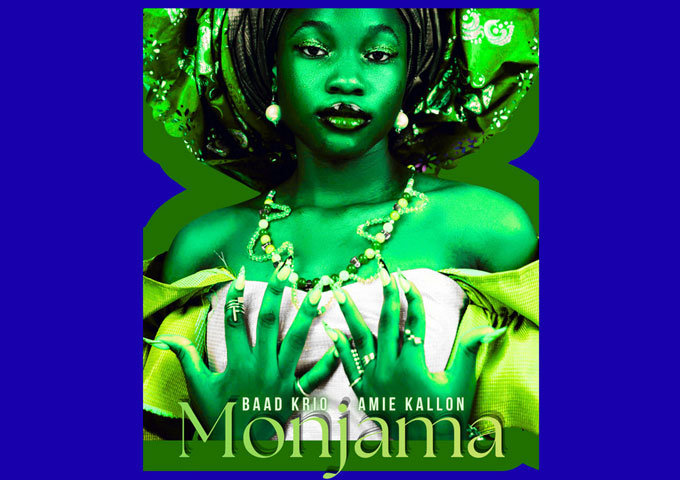
A vibrant meeting of contemporary Afrobeats and Sierra Leonean musical heritage, “Monjama” brings Baad Krio and legendary vocalist Amie Kallon together for a collaboration that bridges generations. Released November 4, 2026, the single places Krio language and cultural expression at the heart of an accessible, rhythmically compelling production. With buoyant percussion, deep basslines, and an irresistible vocal exchange, the track balances dancefloor appeal with a distinctive sense of cultural belonging. Amie Kallon contributes the soulful authority of a voice associated with Sierra Leone’s Mende musical tradition, complementing Baad Krio’s contemporary rhythmic delivery. Together, the artists offer an exciting glimpse of Sierra Leone’s growing potential within the international Afrobeats landscape.
Born in Houston, Texas, Baad Krio carries a connection to Sierra Leone that extends well beyond personal heritage. It is a defining element of his artistic identity and an important motivation behind his creative ambitions. Determined to put Sierra Leone on the international musical map, he approaches contemporary African music as a platform for cultural representation, using the Krio language and its expressive possibilities to connect with audiences who may be encountering this particular cultural perspective for the first time. His November 4, 2026, release, “Monjama”, featuring the celebrated Amie Kallon, represents a particularly compelling expression of that ambition, bringing together contemporary Afrobeats sensibilities and the musical traditions of his ancestral homeland.
The significance of this collaboration becomes immediately apparent through the contrast and complementary qualities of its two principal voices. Baad Krio operates within a modern musical vocabulary, combining rhythmic phrasing and rap-inflected delivery with the accessible energy of contemporary African pop. Amie Kallon, meanwhile, brings the cultural resonance and distinctive vocal character associated with Sierra Leone’s Mende musical tradition. Her contribution gives the recording a deeper connection to the country’s established musical identity, making her involvement considerably more meaningful than a conventional guest appearance. The result is a meeting of different musical generations and approaches, with both artists contributing something essential to the track’s character.
Musically, “Monjama” establishes itself through an infectious Afrobeats groove, driven by buoyant percussion, substantial basslines, and recurring synthesizer hooks. The production has a lively, dance-oriented quality, maintaining enough rhythmic movement to make the song immediately accessible while allowing its vocal personalities to remain at the forefront. Rather than treating traditional influences as decorative additions to a contemporary arrangement, the collaboration makes cultural exchange part of its central musical identity. The balance between modern production and traditional vocal expression creates an appealing sense of continuity, suggesting that Sierra Leonean musical heritage can remain vibrant and relevant while finding new audiences through evolving African pop sounds.
The vocal arrangement is one of the recording’s strongest assets. Amie Kallon brings melodic power and an expressive quality to the recurring refrains, particularly through the memorable Krio-inflected phrase, “Monjama wa mudu lika…” Her delivery gives the song a recognizable melodic anchor, adding warmth and a sense of cultural authenticity to the otherwise contemporary rhythmic framework. Baad Krio responds with more conversational, rhythmically agile verses, shifting the performance toward a playful celebration of attraction, affection, and romantic confidence. Their contrasting approaches create movement throughout the track, preventing the arrangement from becoming predictable and giving the collaboration its distinctive personality.

Lyrically, “Monjama” revolves around a captivating woman whose presence appears to command attention and influence the atmosphere around her. She becomes the central figure in a celebration of attraction, admiration, and emotional attachment, with the song presenting romantic fascination through an energetic combination of Krio and English. The use of both languages is particularly effective because it allows the artists to preserve the cultural identity of their expression while making the underlying sentiments accessible to a wider international audience.
The recurring references to Monjama establish her as more than simply the subject of romantic interest. She represents a magnetic personality, someone whose confidence and presence exert an almost irresistible influence. The repeated melodic refrain reinforces this fascination, functioning as both a declaration of admiration and a memorable musical centerpiece. Its repetition is especially suited to the track’s dance-oriented structure, allowing the central idea to become embedded in the listener’s experience without requiring an overly complicated lyrical narrative.
As the verses develop, the writing introduces additional dimensions of affection, loyalty, and personal commitment. The English-language passages convey a relationship in which admiration develops into a stronger sense of devotion. The description of Monjama as a queen, alongside the suggestion that she possesses control over the situation, communicates both her desirability and her commanding personality. There is a playful confidence in these declarations, but also an acknowledgement of the emotional investment involved in finding someone who inspires such enthusiasm. The romantic perspective is deliberately celebratory rather than introspective, matching the buoyancy of the instrumental and the song’s lively performance.
An interesting aspect of the lyrical approach is the way personal affection exists alongside the broader atmosphere of ambition, status, and urban nightlife. The relationship is presented within a world of confidence, excitement, and aspirational living, giving the track a contemporary Afrobeats sensibility without sacrificing its connection to local linguistic expression. Rather than pursuing an elaborate narrative, Baad Krio and Amie Kallon prioritize immediacy, repetition, melodic appeal, and personality. The lyrics are designed to communicate their sentiments through rhythm and vocal character as much as through their literal meaning.
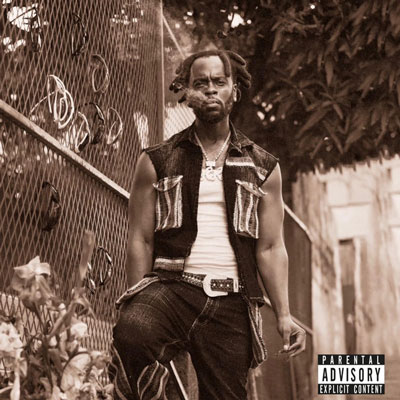
For Baad Krio, this release also represents another step in a developing catalogue that demonstrates his willingness to experiment with different expressions of contemporary African music. His 2026 releases, including “Pala,” “Belly Flat,” “A Mi,” and “Baby Bernard Flow,” provide further evidence of an artist actively exploring his sound while building a recognizable creative identity. His engagement with listeners through platforms such as Instagram and TikTok also reflects an understanding of how emerging artists can develop international communities around music that remains connected to its cultural origins.
What makes “Monjama” particularly encouraging is the wider possibility it represents for Sierra Leonean music. The country’s musical identity possesses a wealth of distinctive linguistic, rhythmic, and vocal traditions, and collaborations like this demonstrate how those qualities can find a place within the increasingly international Afrobeats conversation. Amie Kallon brings the authority of an established cultural voice, while Baad Krio demonstrates the potential of a younger generation determined to carry that heritage into contemporary musical spaces.
Ultimately, “Monjama” succeeds as both an entertaining Afrobeats collaboration and an expression of cultural pride. Its infectious groove, contrasting vocal performances, romantic lyrical perspective, and combination of Krio and English give it an identity that extends beyond its immediate dancefloor appeal. Baad Krio is not simply pursuing international recognition; he is making a case for the musical richness of Sierra Leone and the importance of allowing its language and traditions to participate in the future of African pop. With Amie Kallon alongside him, he delivers a collaboration that celebrates where Sierra Leonean music comes from while confidently pointing toward where it could go next. If this creative direction continues to gather momentum, Sierra Leone could become an increasingly important presence in the global Afrobeats conversation.