
Ricardo Padua’s “Iridescent” Makes Self-Acceptance Sound Like a Frequency, Not a Costume
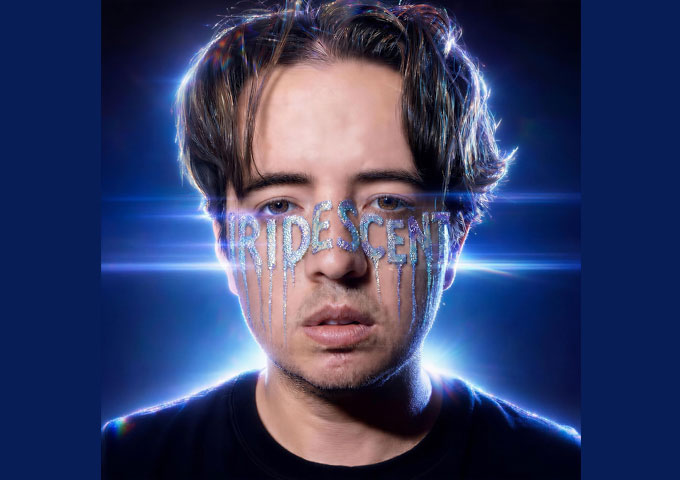
On “Iridescent,” identity isn’t something to put on but a signal that was always transmitting. Ricardo Padua builds the song around that idea, verse by verse, until the metaphor gives way to plain truth. By the bridge, there’s nowhere left to hide.
There’s a particular kind of courage in choosing to be seen. On his new single “Iridescent,” Ricardo Padua turns that courage into an anthem, delivering a track that plays like both a love letter and a declaration of independence for anyone who has ever folded themselves smaller to fit someone else’s map.
The song opens in shadow. Its first verse introduces a woman who “keeps her colors hidden underneath her coat,” smiling through a life charted by other people’s expectations, wings folded, gaze averted. It’s a quietly devastating image, and Padua doesn’t rush past it. He lets the weight sit before the pre-chorus cracks the door open: “something inside wants to breakthrough / like a frequency she’s never let herself pursue.” That word – frequency – does a lot of work. It suggests identity not as a costume to put on, but as a signal that was always transmitting, waiting to be tuned into.
The second verse shifts perspective to a man who “finds his people in the places light forgot,” people who “speak in colors that the outside world does not.” It’s a subtle but pointed reframing: what looks like hiding from the outside is, from the inside, a whole language, a whole world. Padua is clearly writing from within the LGBTQ+ experience here, and the song’s structure – two verses, two people, one shared chorus – becomes its own quiet argument. Different stories, same breakthrough.
And what a breakthrough it is. The chorus arrives like sunrise: “The way the light hits us right now / it makes us shine bright bright bright / we’re not holding back we’re loud / where two worlds come alive.” The triple repetition of “bright” isn’t just a hook – it’s a refusal to be subtle about joy, which feels like the whole point. After a verse about hiding, insisting on brightness is a political act as much as a musical one.
The post-chorus mantra – “This is us / This is our essence / We’re different / We’re iridescent” – is where the title crystallizes into metaphor. Iridescence isn’t a single color; it’s a surface that shifts and refracts depending on how the light hits it, never fixed, never one thing. As a metaphor for queer identity and self-acceptance, it’s an elegant choice – it doesn’t ask for uniformity or a single “acceptable” way of being seen. It celebrates the shifting, multifaceted nature of selfhood as the point, not the problem.

By the bridge, Padua drops the metaphor’s remaining distance and speaks in first person: “I spent so long being someone else’s quiet / I swallowed every color just to keep the peace / but I am not the shadow they mistook me for / I am iridescent and I refuse to hide.” It’s the song’s emotional peak, and its plainest language – no metaphor left to hide behind, just a direct statement of arrival. The two characters from the verses dissolve into a single “I,” suggesting their stories were always one story, and that the song’s writer stands somewhere inside it too.
Structurally, “Iridescent” follows a familiar pop template – verse, pre-chorus, chorus, repeat, bridge, chorus out – but the familiarity works in the song’s favor. This isn’t experimental music trying to match experimental content; it’s a big, accessible, radio-shaped song carrying a message that deserves to be heard by as many people as possible. There’s something quietly radical about wrapping a story of self-acceptance in a hook this undeniable – it doesn’t ask permission to be a pop song and a queer anthem at the same time.
On a craft level, the songwriting is smarter than it first lets on. Ricardo Padua leans on the same tools that have carried this decade’s biggest pop anthems – the stacked pre-chorus that builds tension through repetition (“something inside wants to breakthrough”), the triple-word hook (“bright bright bright”) that mirrors the way artists like Dua Lipa or Troye Sivan turn a single word into a physical, danceable moment, and a post-chorus mantra built for crowds to shout back. That mantra structure in particular – short, declarative, repeatable – echoes the anthemic writing of acts like Kesha or MUNA, artists who’ve made a career out of turning personal reckoning into communal, arms-around-each-other choruses.
But where “Iridescent” distinguishes itself from a lot of current pop is in how patiently it earns its payoff. Much of mainstream pop songwriting front-loads the hook, dropping the chorus within the first fifteen seconds to catch a scrolling thumb. Padua does the opposite: he spends real time in the verses, sitting with images of concealment and quiet before he lets the light in. It’s a structural choice that mirrors the song’s own theme – you don’t get to “bright bright bright” without first sitting in the coat, the folded wings, the swallowed color. That patience is closer to the songwriting instincts of Lorde or early Sam Smith than to the instant-gratification hooks that dominate streaming playlists, even as the chorus itself is built with the same maximalist, festival-ready DNA as any Top 40 single.
The two-verse, dual-perspective device is also a subtler piece of craft than it appears. Plenty of pop songs use a second verse to deepen a single narrator’s story; fewer use it to introduce an entirely different character whose experience only meets the first in the chorus. It’s a technique more common in show tunes or concept albums than in three-minute radio singles, and it gives “Iridescent” a sense of scale – this isn’t one person’s story, it’s a shared one – without ever needing a guest verse or feature to make that point.

It’s hard to talk about a queer self-acceptance anthem built on a maximalist pop chorus without the shadow of Lady Gaga’s “Born This Way” entering the room, and the comparison is instructive precisely because of where the two songs diverge. Gaga’s anthem operates as manifesto – its power comes from proclamation, a chorus that announces identity as an already-settled fact (“I was born this way, baby”) and dares the world to argue. It’s a song written from a position of defiance already achieved, aimed outward at anyone who might object.
“Iridescent” is written from further back in the process. Its verses don’t open on certainty; they open on concealment, on characters who are still learning the shape of what they’re allowed to want. Where “Born This Way” starts at the finish line and stays there for four minutes, Padua’s song narrates the actual crossing – the folded wings, the swallowed color, the frequency someone has “never let themselves pursue” – before it ever arrives at the light. That makes the eventual chorus feel less like a proclamation to the outside world and more like a private threshold being crossed, which is why the song saves its most declarative language (“I am iridescent and I refuse to hide”) for the bridge rather than the hook. Gaga tells you who she is from the first line; Padua lets you watch someone become it.
The two songs also differ in scale of address. “Born This Way” speaks to everyone at once – it’s a big-tent, universalizing anthem that lists identities almost like a roll call, built to be sung by a stadium regardless of who’s in it. “Iridescent” stays smaller and more intimate by design: two specific people, two specific verses, a chorus that talks about “us” rather than “everyone.” It’s less interested in being the anthem for a movement than in being the anthem for a room – the “places light forgot” where people who understand each other’s weight find one another. If “Born This Way” is queer pop’s declaration of arrival, “Iridescent” reads more like its private diary entry the night before, which gives Padua’s song an intimacy that the genre’s biggest anthems don’t always have room for.
“Iridescent” ultimately lands as a song about the specific, hard-won relief of being seen for exactly what you are – and finding that the light doesn’t diminish you, it reveals you. Ricardo Padua has written something that functions as both mirror and invitation: for listeners still keeping their colors hidden underneath a coat, it says the frequency is still there, waiting to be pursued. For everyone else, it’s simply a very good pop song about refusing to dim.
Listen to the song:
Follow Ricardo Padua on social media:
https://instagram.com/rikrdopadua