Lala Vale Steps Into the Space Between Sleep and Sorrow With “Lucid Dreams”
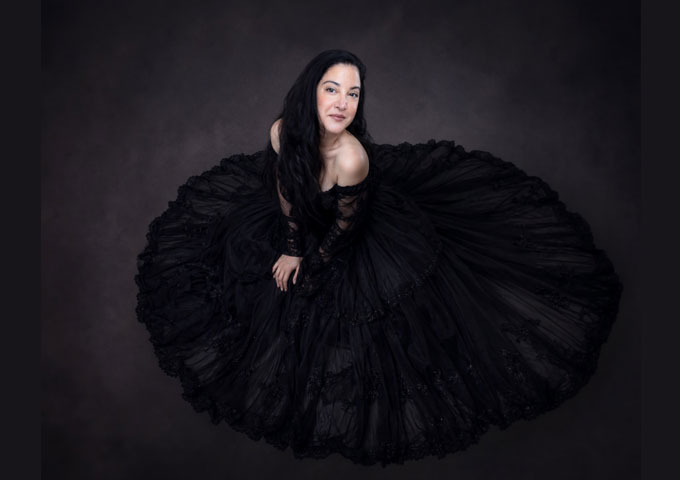
A haunting new single finds the alto singer-songwriter suspended between memory and imagination. Built on acoustic intimacy and cinematic swell, it traces grief’s quiet, unresolved edges. The result is a track that feels less like a song and more like a held breath.
Grief rarely announces itself cleanly, and Lala Vale understands that better than most. On her new single, “Lucid Dreams,” the singer-songwriter builds a world that exists in the fog between waking and sleeping, between holding on and finally letting go. It’s a song about the specific, disorienting comfort of dreaming someone back to life, and about how that comfort curdles the moment daylight arrives.
Musically, “Lucid Dreams” sits at the intersection of dream-pop, pop-folk and dark-pop, anchored by an acoustic guitar that never overplays its hand. Live drums, piano and ambient synths widen the frame gradually, letting the arrangement breathe rather than swell for effect. It’s a production choice that trusts restraint, and that trust pays off, because the song’s real instrument is Vale’s voice. Deep, textured and unmistakably shaped by her years as a jazz vocalist, her alto carries a 1970s warmth that feels lived-in rather than borrowed. There’s a smokiness to her phrasing that recalls the intimacy of a late-night jazz room even as the surrounding production reaches for something more atmospheric and cinematic, closer in spirit to the moody, mood-led work of London Grammar, First Aid Kit and Lana Del Rey.
What makes “Lucid Dreams” stand apart, though, is how precisely it maps an emotional state that most songs about loss only gesture toward. The lyrics open inside a dream where the narrator is reunited with someone she’s lost, and immediately the physical sensations pile up: a racing heart, a shiver down the spine, the strange familiarity of terrain she already knows by heart. This isn’t a hazy, symbolic dream sequence. It’s rendered with an almost forensic attention to bodily detail, as though the narrator is trying to hold onto proof that the encounter is real even as she suspects it isn’t. That tension between wanting to believe and knowing better runs through the entire first verse, culminating in a confession that she was never fully honest with the person she loved, and that she’s still searching, even now, for the words to say what she never said in life.
The chorus turns that ache into something closer to bargaining. Repeated conditional phrases, built around the plea of what could happen “if only,” give the song its emotional architecture, a structure that mirrors the way grief actually works, circling the same impossible wish without ever landing on resolution. There’s no dramatic climax here, no cathartic release. Just the quiet, repeated request to be seen, to be heard, to make someone stay who cannot stay. It’s a chorus that resists easy comfort, and that refusal is part of what makes it feel so honest.
The second verse pushes further into sensory territory, introducing an “eighth sense” that activates in these dream states, one that lets the narrator feel the weight of a hand that isn’t there and taste air that shouldn’t exist outside of memory. It’s a striking image, suggesting that grief creates its own perceptual register, an extra channel of feeling that only opens once someone is gone. And then comes the song’s most quietly devastating admission: that missing this person, even with the pain it brings, is somehow less painful than facing real life without them. That line reframes everything around it. The dreams aren’t an escape from grief so much as a gentler version of it, a way of metabolizing loss in smaller, survivable doses.
By the third verse, the dream imagery turns apocalyptic, an ocean overtaking a small town, an earthquake pulling someone under, and it’s here that the song delivers its central line, the one this whole article was built to sit inside without spelling out. The narrator describes a limbo state where it feels too soon to be buried but too late to be saved. It’s a devastating piece of writing precisely because of its plainness. There’s no metaphorical dressing left to unpack. It states outright what the entire song has been circling: the impossibility of a clean ending, the sense of being stranded between two states that should be mutually exclusive but somehow aren’t. Grief, Vale suggests, doesn’t resolve on a timeline. It leaves people suspended, unable to fully release what’s gone and unable to fully move forward either.
What elevates “Lucid Dreams” beyond a well-crafted breakup or loss narrative is the specificity of its emotional logic. This is a song that understands dreaming not as fantasy but as a coping mechanism with its own physics, its own rules, its own cruelty. The dream world offers touch, taste, presence, everything real life has taken away, and that’s exactly why waking from it hurts. Vale’s lyricism never over-explains this idea. She lets the imagery carry it, trusting listeners to feel the ache of a hand reaching for someone across water only for the ground to give way beneath them both.
This kind of unfiltered emotional honesty tracks with everything Vale has said about her own path into songwriting. She didn’t start out chasing a music career in the conventional sense. Her voice was shaped first in jazz bars, and it wasn’t until later in life, after adopting two children with special needs and while deeply immersed in animal rescue work, that she felt compelled to start writing her own material. That background shows up in the way she handles difficult subject matter here. There’s no performative sadness in “Lucid Dreams,” no aestheticized melancholy for its own sake. Instead there’s the specific, hard-won clarity of someone who has spent real time sitting with loss and choosing to write about it honestly rather than prettily.
“Lucid Dreams” rewards close, attentive listening rather than passive consumption. It’s a song built for headphones and quiet rooms, for the kind of mood-led radio programming that gives atmosphere room to land. With her rich alto voice held right at the front of the mix and a production that knows exactly when to pull back, Lala Vale has crafted something that feels less like a single and more like an excavation, honest, unresolved, and quietly unforgettable.