Paul Robert Thomas Turns ‘Influences’ Into a Living Gallery of Courage, Loss and Legacy
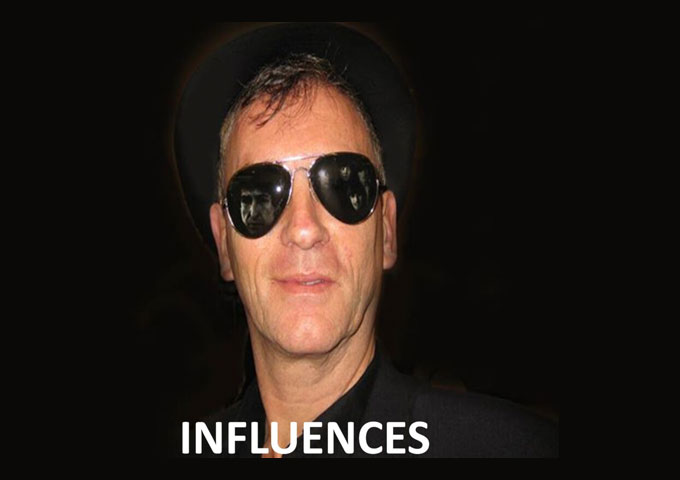
The 60th album from the prolific writer, producer and vocalist brings history’s boldest figures to life through original songs and deeply human storytelling. ‘Influences’ blends alt-folk, alt-rock and alt-pop with the heart of a true singer-songwriter. From John Lennon to Anne Frank, every track treats a famous life as a lesson worth carrying forward. Thomas writes every lyric and sings every note, giving the collection a single, unmistakable voice. The result is a record that feels less like a tribute project and more like a conversation across generations.
Sixty albums into a career, most artists would be coasting on reputation. Paul Robert Thomas is doing the opposite. With ‘Influences’, he sets aside the safety of the personal confessional and steps into the lives of people who bent the course of history, then asks what their stories can teach those of us still living. All lyrics and vocals are his own, and the album folds alt-folk, alt-rock and alt-pop into a sound shaped by serious singer-songwriter instincts. The arrangements never crowd the storytelling. They give it room to breathe, which is exactly what these narratives need.
The record opens with ‘What You Lose’, a stark meditation on mortality that works as a thesis for everything that follows. Thomas frames the song as a free truth offered to anyone willing to listen, not a sermon from a pulpit. His message is that wealth cannot repurchase what has been lost, whether that is a love, a friendship or time itself. By stripping away pretense in the first moments, he sets a tone of honesty that the rest of the album honors. It is a quiet but forceful declaration that human connection is the only currency that truly matters.
From there, ‘Christmas Snow and the London Rain’ pivots into something more sensory and homesick. The narrator is stranded in a punishing desert, drained by heat and isolation, and longing for the cool streets of winter London. Thomas builds the song on contrast, letting the merciless sun stand for loneliness while the rain and snow of home become something close to sacred, a cleansing force that could restore hope. Anyone who has ever felt the physical ache of being far from the place that made them will recognize the feeling immediately. It is a small song with an enormous emotional reach.
‘In These Modern Times’ turns the lens outward and delivers the album’s sharpest social critique. Thomas looks at a world racing ahead technologically while sliding backward in empathy, where greed, self-absorption and disposable relationships have replaced the values that once held communities together. The song mourns the vulnerable people who suffer in that gap and the creative spirit that fades along with it. What keeps it from becoming a bitter lecture is Thomas’s refusal to surrender. He sounds worried but never defeated, and that stubborn hope gives the track its pulse.
The biographical portraits begin in earnest with ‘Sincerely Mr. Hughes’, a cautionary tale about Howard Hughes, the aviation pioneer whose fortune seemed limitless. Thomas skips the glamour and follows the unraveling instead, tracing how a devastating plane crash led to painkiller dependence, germaphobia and a retreat into extreme isolation. By the end, the once dazzling innovator is physically unrecognizable, a man surrounded by everything money could buy and denied everything it couldn’t. The moral is delivered plainly, and the plainness is what makes it land. Riches, the song insists, offer no shield against pain, illness or loneliness.
Warmth returns with ‘The Little Tramp’, a tribute to Charlie Chaplin that follows his path from London poverty to worldwide adoration as the silent screen’s most beloved comic figure. Thomas does not stop at the laughter. He lingers on the cost of Chaplin’s public pleas for peace and human unity, which provoked political hostility during the Cold War and pushed him into exile. The song celebrates the vindication that came later, when honors in his final years confirmed what audiences had known all along. It is a gentle, affectionate portrait that never forgets the injustice at its center.
That sense of injustice becomes a rallying cry on ‘Suffragettes’, a fiery historical anthem built around Emmeline Pankhurst and the women who risked their safety to demand the vote in early twentieth century Britain. Thomas captures both the fierce institutional resistance they faced and the unwavering resolve behind their famous call to favor action over speech. The song reads like a reminder to modern listeners that the freedoms we treat as ordinary were purchased at real personal cost. It has the swagger of a protest song and the dignity of a monument.
Few songs on the record hit as hard emotionally as ‘Buddy is Gone’. Thomas centers his eulogy on the night of February 3, 1959, the date remembered as The Day the Music Died, but he deliberately avoids leaning only on rock and roll mythology. Instead, he turns toward the human wreckage left behind. He touches on the grief of Buddy Holly’s pregnant wife, Maria, and the lasting regret carried by Waylon Jennings, who survived the tragedy that others did not. By focusing on survivor’s guilt and private sorrow, Thomas reminds us that behind every legend stands a circle of people who simply lost someone. Holly’s innovative spirit, meanwhile, is honored as something that never stopped echoing.
The album’s most solemn moment arrives with ‘Last Train to Auschwitz’, a detailed and deeply respectful account of Anne Frank’s life. Thomas moves through the historical milestones with care, from her family’s flight from Nazi Germany in 1933 to the long, hidden years in the Amsterdam Annex, to the arrest in 1944 and the brutal transports that followed. He acknowledges the diary that made her voice immortal and the heartbreaking fact that she and her sister Margot died of typhus only shortly before liberation. The song functions as both testimony and lament, and Thomas wisely resists any urge to embellish. The facts, delivered with empathy, are devastating enough.

Energy and admiration surge back with ‘Like a Butterfly’, an expansive ballad about Muhammad Ali. Thomas follows the boxer from his boyhood in Louisville to his status as the greatest of all time, covering the monumental fights, including the Rumble in the Jungle and the Thrilla in Manila, with a reporter’s eye for detail. Yet the song’s real subject is conviction. Thomas highlights Ali’s principled stand against war and his lifelong devotion to peace and humanitarian causes, making the case that his moral courage mattered even more than his fists. It is a celebration with substance, and it reaches well beyond the world of sport.
The album closes on its most personal note with ‘John in Strawberry Field’, Thomas’s tribute to John Lennon. Here the biography gets a first-person companion. Drawing on his own visits to the Dakota building and Central Park, Thomas weaves reportorial history together with private reflection, and he finds quiet parallels between Lennon’s fractured childhood in Liverpool and his own early years. The song moves through Beatlemania, the activism and the senseless violence of Lennon’s assassination by Mark David Chapman, then settles on the lasting message of peace that has outlived the tragedy. It is a fitting finale, because it shows what the entire album has been quietly arguing: influence is not just admiration, it is the way another life can shape your own.
Those ten songs are only part of the larger picture. Thomas has written about many more cultural giants across the four volumes of The Chelsea Hotel Collection, created with Les Paul’s (The Paul’s). The sprawling The Chelsea Hotel Collection Volumes 1 to 4 is described as a pilgrimage through the corridors of artistic eternity, and its guest list reads like a who’s who of music, art, film and literature. Names such as Andy Warhol, Allen Ginsberg, Bob Dylan, David Bowie, Janis Joplin, Jimi Hendrix, Joni Mitchell, Leonard Cohen, Patti Smith, Tom Waits and William S. Burroughs are just the beginning, joined by Bette Davis, Jim Morrison, Lou Reed, Madonna, Nick Cave, Sid Vicious and many others who once passed through those legendary halls. Together, the volumes show a writer who treats creative history as a living archive rather than a museum.
What ultimately elevates Influences is Thomas’s restraint and sincerity. He could have chosen spectacle, but he opts for clarity, trusting the stories of these remarkable people to carry their own weight. His voice stays warm and unhurried, and the blend of alt-folk textures, alt-rock muscle and alt-pop melody keeps the album from ever feeling like a history lesson. Each song asks the listener to look a little more closely at someone they thought they already knew. In a catalog already running to sixty albums, Paul Robert Thomas has delivered one of his most purposeful works, a record that honors the past while reminding us that its echoes have never sounded more alive.
OFFICIAL LINKS:
https://www.paullyrics.com/album/influences
http://www.youtube.com/paulie56il
https://www.facebook.com/paullyricist