Erik Hansen Turns Classic Rock’s Many Voices Into One Powerful Statement on ‘The Eternal Conflict’
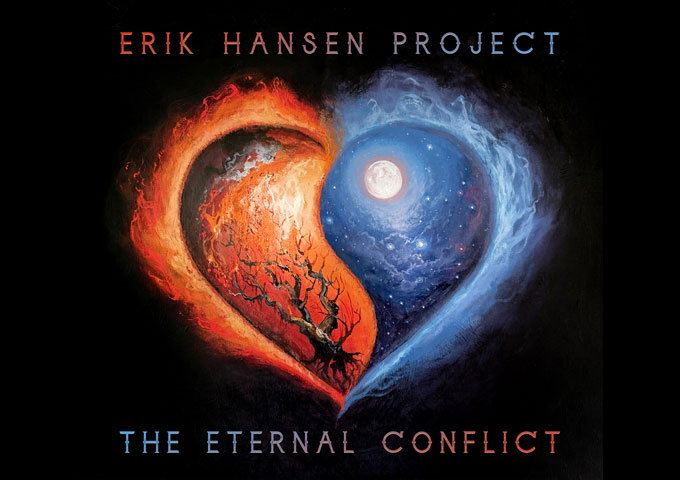
Erik Hansen explores the enduring power of guitar-driven music across The Eternal Conflict. The Seattle artist moves freely between classic rock, metal, punk, alternative rock, and melodic hard rock. Twelve tracks reveal a songwriter equally invested in crushing riffs, memorable melodies, atmosphere, and emotional weight. With longtime collaborators and a dynamic lineup behind him, Hansen transforms decades of rock influence into something distinctly personal. From the explosive opening of “Far Away” to the closing glow of “Shine,” The Eternal Conflict is a confident celebration of everything that keeps rock music alive.
Erik Hansen understands something fundamental about rock music: its history is not a cage. It is a vocabulary. On The Eternal Conflict, his ambitious first full-length album, the Seattle artist takes that vocabulary and speaks it in a language that moves comfortably between classic rock muscle, metal heaviness, punk urgency, alternative darkness, and melodic hard rock. The result is a 12-track record that never seems particularly interested in choosing a single lane when the entire highway is available.
The album arrives as a substantial next chapter following “Seasons of the Wind” I, II, III, the trilogy of EPs Hansen released a year earlier. Rather than simply extending that previous work, The Eternal Conflict broadens the scope. Heavy guitars remain central, but Hansen understands that volume alone does not create impact. Riffs need memorable shapes. Drums need movement. Bass needs groove. Vocals need melodies that can survive after the distortion disappears. Arrangements need tension and release. Across this album, those elements continually interact, giving the music a physical force without sacrificing its emotional dimension.
That sense of balance becomes apparent immediately with “Far Away.” The opening track does not politely introduce the album. It kicks the door open. Smashing guitar riffs, powerful drumming, and dynamic bass establish a muscular foundation while Hansen’s energetic vocals ride above the arrangement with conviction. Yet the real strength of the song lies in how carefully its power is constructed. The transitions feel purposeful, the bridge before the final chorus creates an effective lift, and the repeated vocal echo at the end gives the track a lingering afterimage. It is an opener that understands the value of momentum while still leaving room for musical detail.
Then “Pieces of Yesterday” shifts the record toward punk-rock immediacy without abandoning its hard-rock backbone. A melodic guitar figure sets the track in motion before the songwriting accelerates into a direct, fast-moving structure reminiscent of alt-rock’s tradition associated. The influence is recognizable without overwhelming Hansen’s own identity. His guitars retain enough weight to keep the song connected to the album’s heavier foundation, while the melodic writing gives it a sharp accessibility. It is precisely this ability to move between traditions without making the transitions feel forced that becomes one of the album’s defining strengths.
“Celestial” takes the darkness deeper. The song draws from the ominous side of classic heavy rock, with echoes alongside brooding alternative-rock character. Yet its appeal is not simply that it points toward recognizable influences. Hansen combines those ingredients into an atmosphere that feels appropriately shadowed and imposing. The track illustrates how The Eternal Conflict can change temperature without losing its identity.
That constant movement continues with “Holding Out and On,” which injects fresh energy into the sequence, before “Fight to Live” turns inward. Here, Hansen allows reflection and intensity to occupy the same space. The song provides an emotional counterweight to the album’s more explosive material, reminding the listener that heaviness can exist in the subject matter and delivery as much as in the guitar tone. That contrast is crucial because The Eternal Conflict is not constructed as a relentless barrage. Its strongest moments often emerge from the spaces between aggression and introspection.
“In Your Eyes” restores the hard-rock attitude, bringing the guitars and driving character back to the forefront. Then “She Dances” slows the pace into a compelling mid-tempo setting where melody becomes the principal attraction. Beautiful vocal harmonies, an intriguing arrangement, and a more measured rhythmic approach allow the musicianship to breathe. Rather than treating restraint as a loss of intensity, Hansen uses it as another form of power. The song demonstrates that a rock album can command attention without constantly pushing toward maximum volume.
The journey continues with “Dreaming in the Dark,” another expression of the album’s fascination with atmosphere and contrast. “Lost and Lonely” brings another emotional shade into focus, while “More to Say” continues Hansen’s exploration of melodic songwriting and dynamic rock arrangements. By this stage, the album’s variety has become less about genre-hopping and more about perspective. Each song approaches guitar-driven music from a slightly different angle, but the songwriting remains the connective tissue.
That connection becomes especially apparent with “Seasons.” The title carries particular significance because of its relationship to Hansen’s earlier “Seasons of the Wind” trilogy. Its placement on the album gives The Eternal Conflict a sense of continuity, suggesting that this full-length release is not an isolated experiment but another stage in an ongoing creative journey. The past remains present, but it is being reshaped rather than simply repeated.
Finally, “Shine” brings the album to its conclusion. After the riffs, grooves, harmonies, darker passages, reflective moments, and bursts of punk energy, the closing track completes the record’s broad emotional arc. It leaves behind the impression of an album that has deliberately embraced contrast as part of its identity.
The musicians surrounding Hansen are essential to that identity. Drummer Kip Rondorf, bassist Carl Larsson, and guitarist Robbie Houston contribute to a lineup whose chemistry gives the material considerable depth. Larsson’s history with Hansen stretches back to 2002 across various projects, while Houston has also contributed engineering and production expertise. Rondorf brings a groove-conscious approach informed by the rhythmic instincts of generational players, ensuring that even the album’s heaviest passages retain a sense of movement rather than becoming static walls of sound.
Hansen’s own musical history reaches much further back. His childhood exposure to his father playing guitar and pedal steel provided an early connection to performance, while later influences including Nirvana, AC/DC, and Metallica expanded his musical imagination. His experience with bands such as Fallen Angels and metal act Skelator further shaped his understanding of heavier music. Those influences can be heard across The Eternal Conflict, but they function as ingredients rather than instructions.
That distinction matters. The album carries traces of rock’s many legendary reference points, but it does not exist merely to recreate a particular decade or scene. Hansen uses the history of rock as raw material. He takes its riffs, melodic instincts, rhythmic vocabulary, guitar interplay, and appetite for emotional directness, then filters them through his own songwriting and the musicianship of collaborators who understand the architecture of the songs.
The result is a record that feels comfortably connected to vintage rock culture while still functioning as a contemporary release. The Eternal Conflict knows what classic rock does well, but it also recognizes that reverence without personality can quickly become imitation. Hansen avoids that trap by allowing the album to breathe across different sounds and emotional registers.
From the explosive opening of “Far Away”, through the punk-driven urgency of “Pieces of Yesterday”, the darker atmosphere of “Celestial”, the reflective weight of “Fight to Live”, the melodic grace of “She Dances”, and the closing presence of “Shine,” The Eternal Conflict makes its case through songs rather than nostalgia. It is heavy when it needs to be, melodic when melody carries greater emotional force, atmospheric when the music demands shadow, and energetic whenever the guitars need to roar.
For Erik Hansen, the album represents a substantial statement about what guitar-driven rock can still accomplish when its traditions are treated as foundations rather than boundaries. The Eternal Conflict brings decades of musical inspiration into conversation with Hansen’s own creative identity, resulting in a record where riffs have weight, melodies have purpose, grooves have movement, and every track contributes another facet to the whole. It is a celebration of rock’s enduring vocabulary, delivered with enough personality to make that familiar language feel alive again.